
Property boundaries
Plan the route using reliable boundary information, not an assumption based on an old fence line.
Farm & Acreage Fencing
Fence lines, access gates, and repairs for acreage and rural properties, planned around the land and its intended use.
Call or text (678) 245-1920.
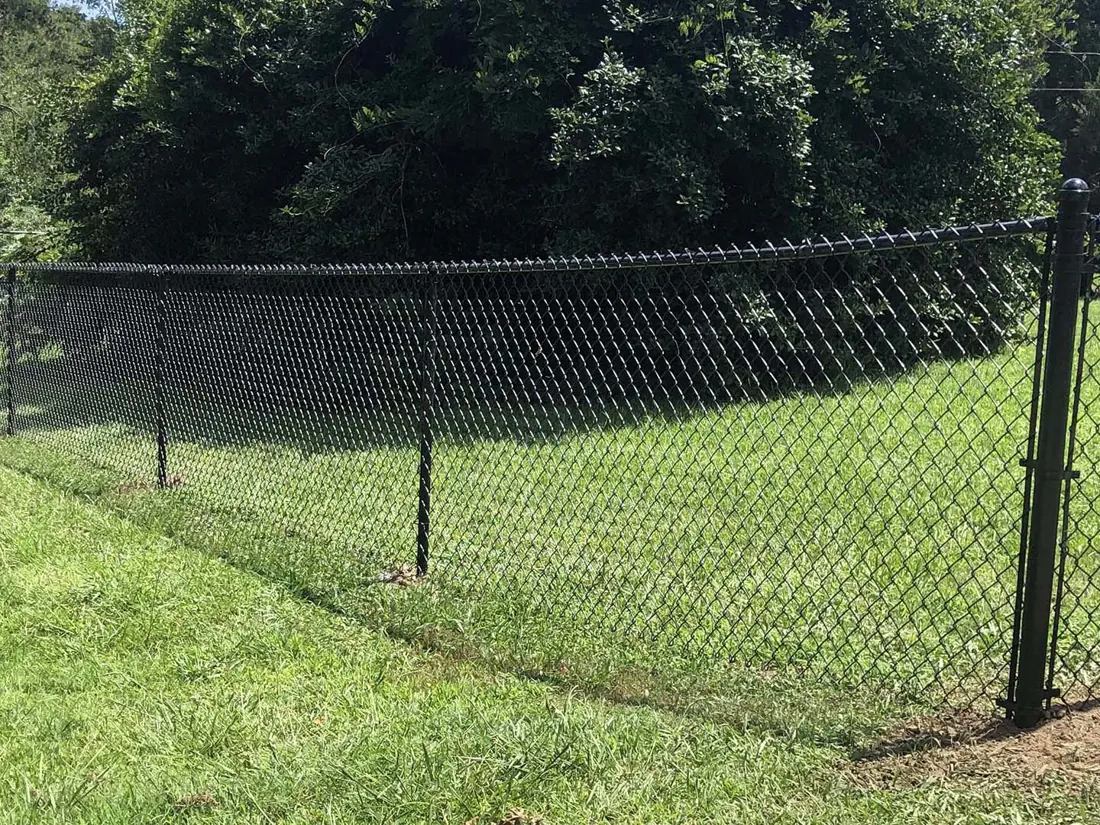
Farm & Acreage Fencing with DJ Fence & Gate
Acreage projects begin with use, not just footage. You may want to define a boundary, organize access, enclose a work area, or replace sections that are no longer doing their job. The right discussion starts with what needs to be kept in, kept out, or reached through a gate.
We review farm and rural-property fencing requests with the layout, terrain, existing fence, and access in mind. If animals are involved, tell us their type and how the area is managed so the proposed fence can be discussed for that purpose. We do not treat every animal or property as interchangeable.
For larger projects, bring a property sketch or survey, your preferred gate locations, and any priorities for completing the work in sections. We can discuss scope and phasing without assuming the entire boundary must be replaced at once.
The details that matter
Plan the route using reliable boundary information, not an assumption based on an old fence line.
Discuss the vehicles, trailers, and equipment using each opening, plus the space needed to approach and turn.
Identify damaged sections, loose supports, and access problems for a practical repair assessment.
Tell us the intended use, including animals or work areas, so materials and layout can be reviewed accordingly.
Compare the details
Start with the look you like, then compare privacy, access, care and the needs of your property.
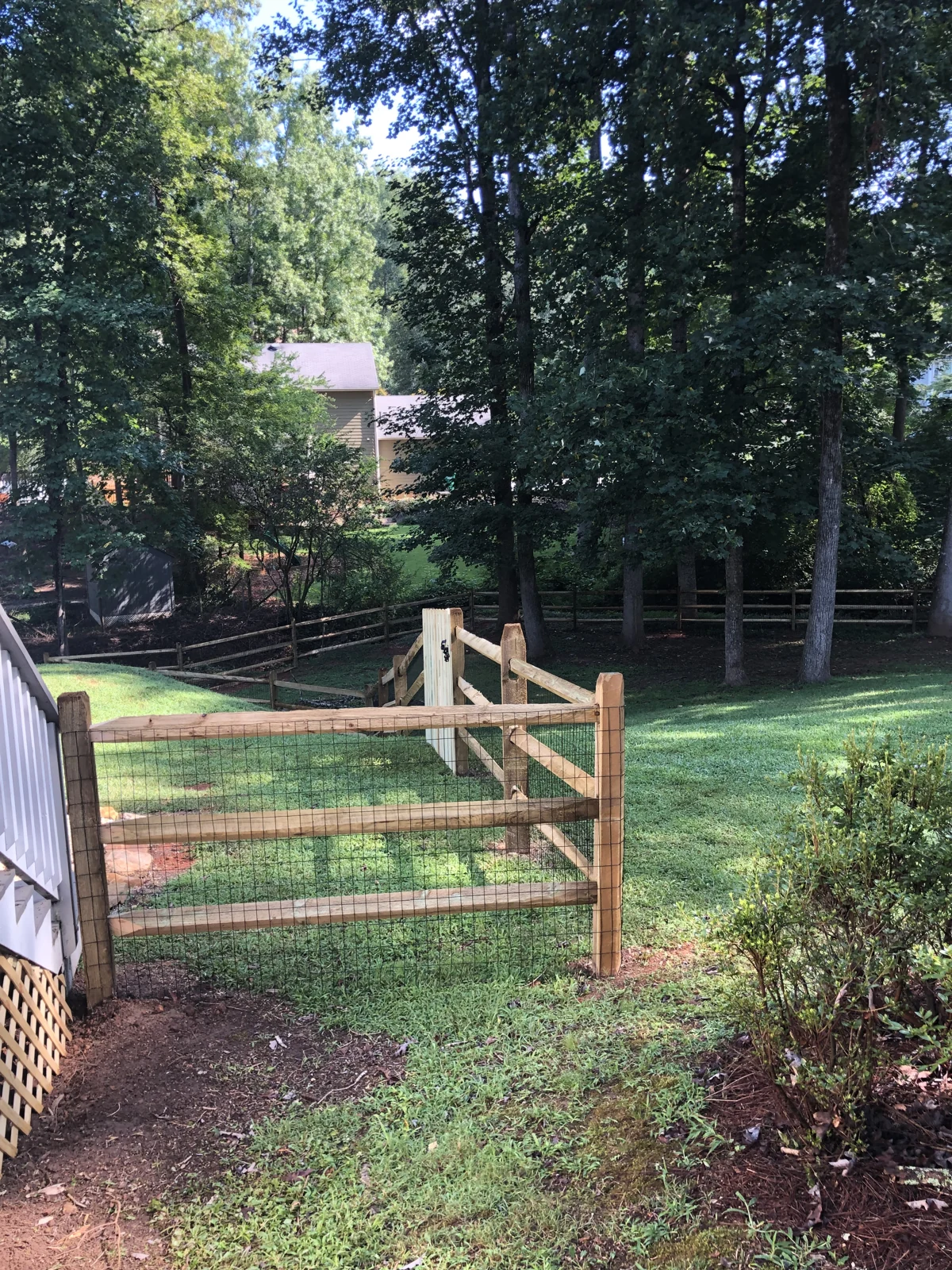
Rustic rails define the boundary while wire adds a closer-spaced enclosure. Wire type, openings, height and bottom clearance must suit the intended animal or use.
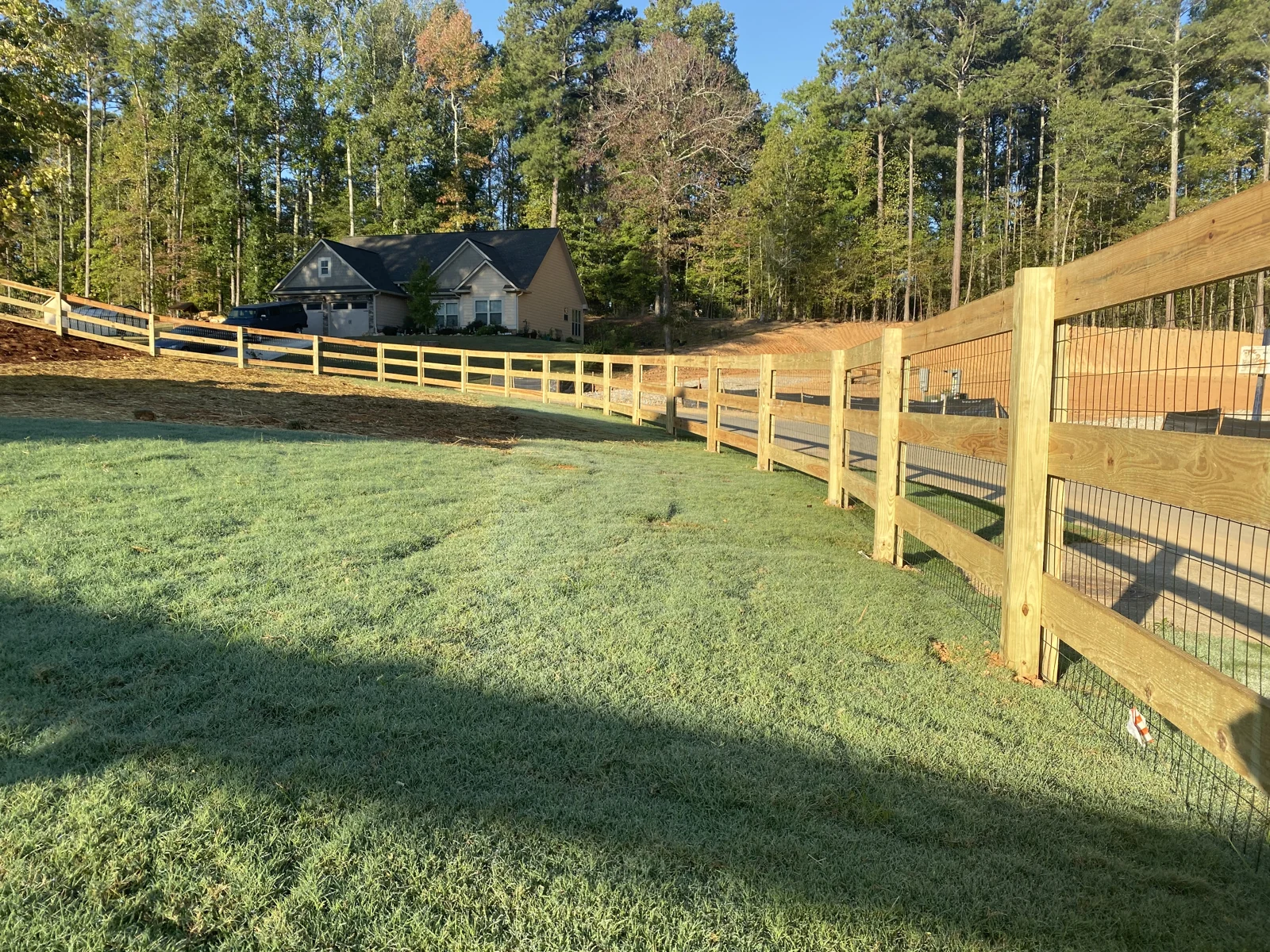
Straight horizontal boards create an open landscape boundary. Discuss the number of rails, wire specification and gate width as a complete containment plan.
A closer look
Ask us to compare pressure-treated pine and cedar for the selected design and current availability. The estimate should identify the lumber, boards, rails and posts rather than describe everything simply as a wood fence. Steel-post options can also be discussed when you want a wood appearance with a different support system.
Pickets create the visible face, rails carry the boards between posts, and posts support the run. A decorative cap or trim board changes the finish, but it is not a substitute for a properly planned structure. Gate posts and gate frames deserve separate attention because they carry moving loads.
Stockade and board-on-board are useful starting points for backyard privacy. Shadowbox, spaced horizontal and picket styles have more open sightlines. Stand where you actually use the patio or yard and consider the view from an angle, not just straight on.
For a shared boundary, discuss which face will be visible from each property and what local or private design rules require. A photo can help communicate the look, but the written scope should settle board orientation, spacing, cap detail and gate treatment.
A fence can be laid out to step with changes in level or follow a grade where the selected construction permits. Neither approach is right for every yard. Review the bottom clearance, corners, retaining features and gate locations before deciding on the layout.
A gate placed on a slope may need a different swing direction or opening arrangement. Include mower width, deliveries, bins and future landscape access in that discussion. Keep drainage routes in view rather than using boards to block an unresolved runoff problem.
See the possibilities
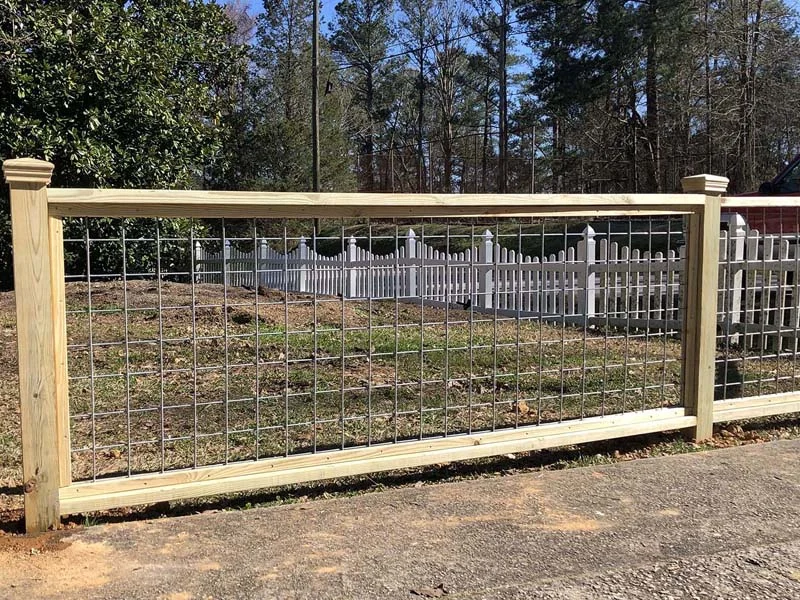
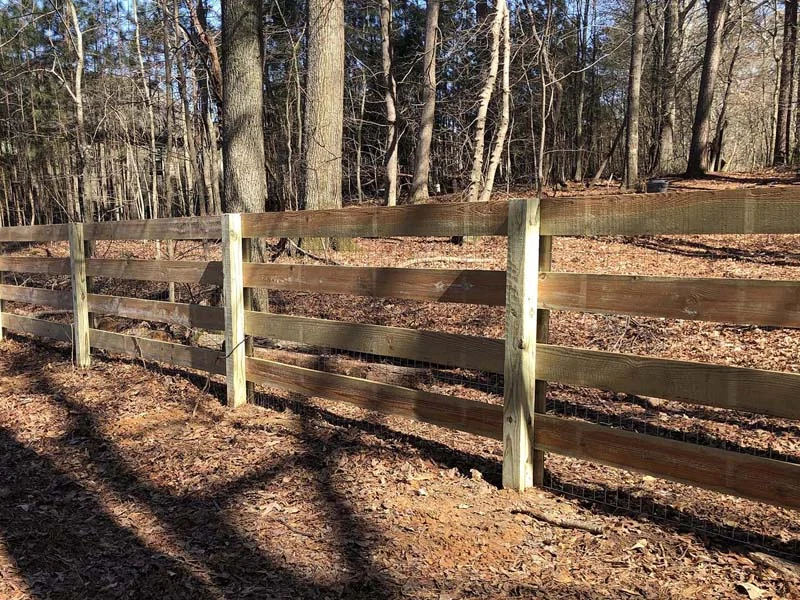
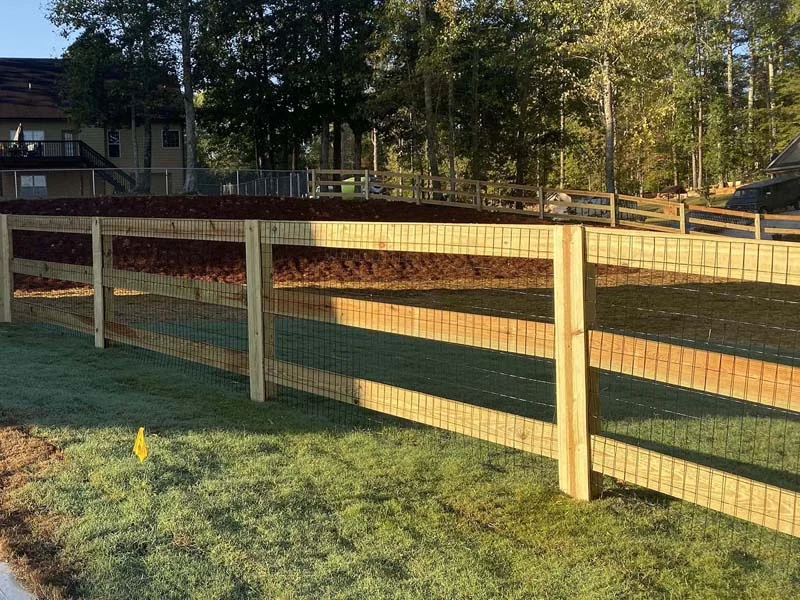
Use these design examples to compare layouts, finishes and openings. Share the details you like when you request an estimate.
A clear way forward
Mark proposed fence lines, known boundaries, gates, and the sections you want to keep.
Identify animals, equipment, traffic, and access needs rather than choosing a style from a photo alone.
Discuss vegetation, grade changes, drainage, existing structures, and how materials can reach the work area.
Clarify the project classification and the written coverage. Do not assume all rural-property work qualifies as a complete residential installation.
We stand behind our work
Qualifying complete new residential installations are covered for as long as the original customer owns the property. Non-transferable. Material defects, natural wood changes, and other exclusions apply. Repairs and commercial work have separate terms.
Before we get started
Yes. We can discuss targeted repairs and review the condition of nearby sections before recommending the scope.
Yes. Share the vehicles and equipment that need to pass through so the opening and approach can be discussed.
An existing fence is not proof of the boundary. Use reliable property information and obtain a survey when needed before finalizing the layout.
No. Coverage depends on the scope and project classification. Qualifying complete new residential installations have limited lifetime workmanship coverage; repairs and commercial work have different terms.
Not from every angle. Alternating boards create partial screening while leaving openings. Compare it with stockade or overlapping board-on-board if blocking sightlines is your main goal.
Ask about a compatible steel-post option for your chosen layout. Availability, post details, gate supports and any finish requirements should be included in the proposal.
Explore your options
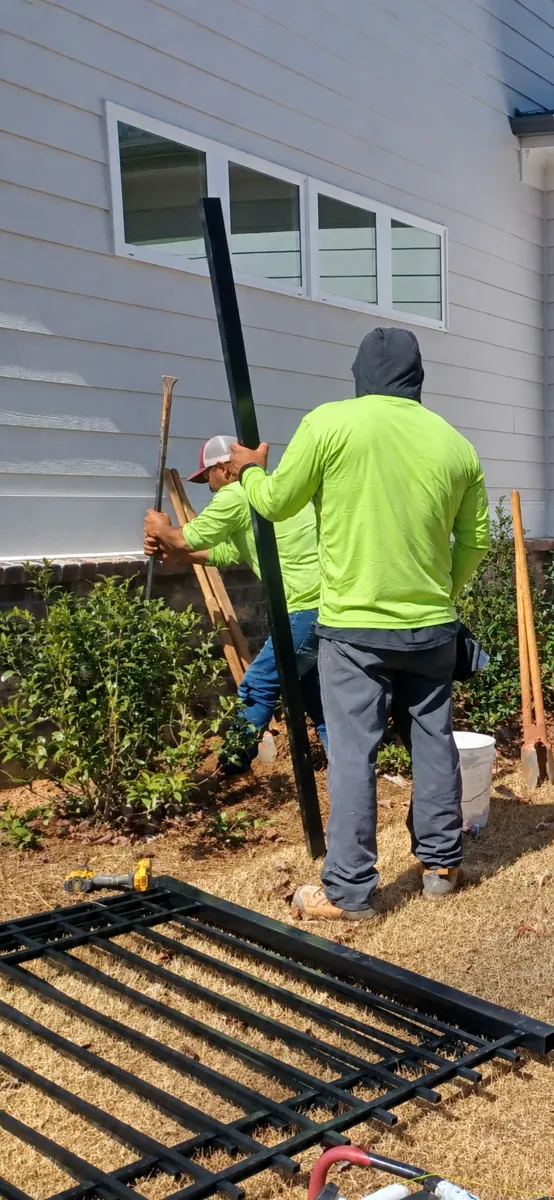
Leaning posts, broken boards, storm-damaged sections, and everyday wear. Let’s look at what can be fixed before you commit to a whole new fence.
Take a closer look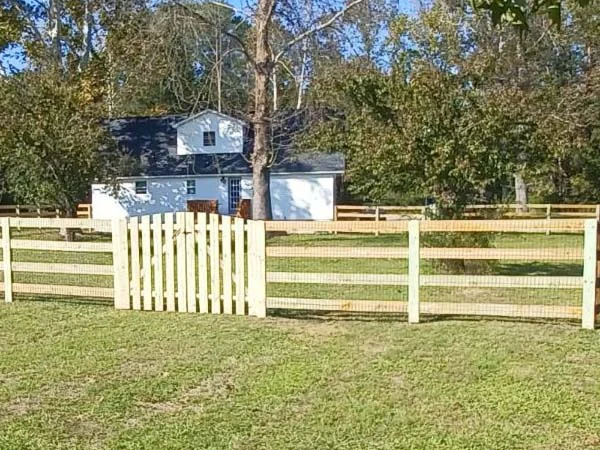
Walk gates, driveway entrances, and commercial openings designed around the way people and vehicles use your property.
Take a closer look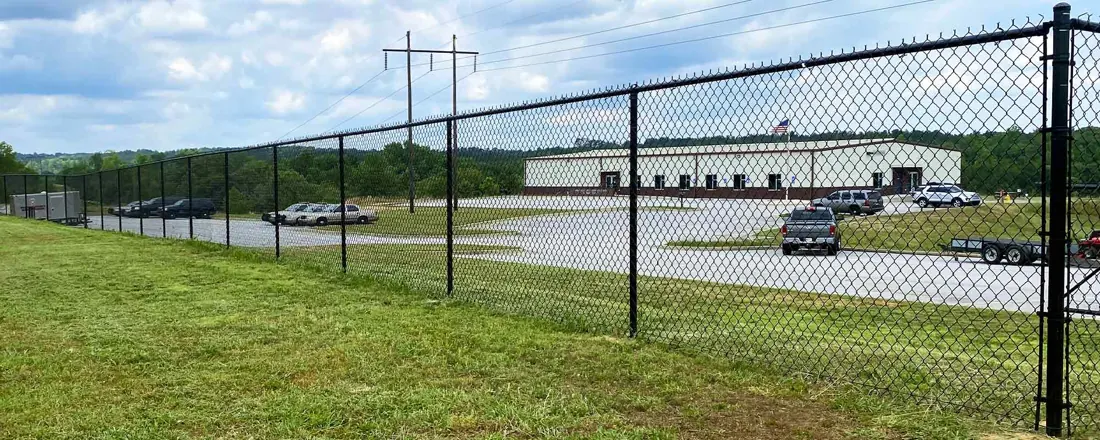
Commercial fencing, repairs, gates, and access control for property owners, facility teams, general contractors, and public-sector projects.
Take a closer lookClose to the work
Based in Paulding County, with residential and commercial service across these eight counties.
Let’s get it taken care of
Share the location and a few details. We’ll follow up to discuss the work, answer questions, and arrange the next step.
(678) 245-1920Have photos? Text them to our main number. For commercial plans, email your documents or include a sharing link in the form.