
New pool entrances
Coordinate the pedestrian gate with the fence, walking route and pool-barrier requirements.
Pool Gates
Pool gates, replacement hardware and repairs, with the opening, swing direction, self-closing hinges and latch planned as one system.
Call or text (678) 245-1920.
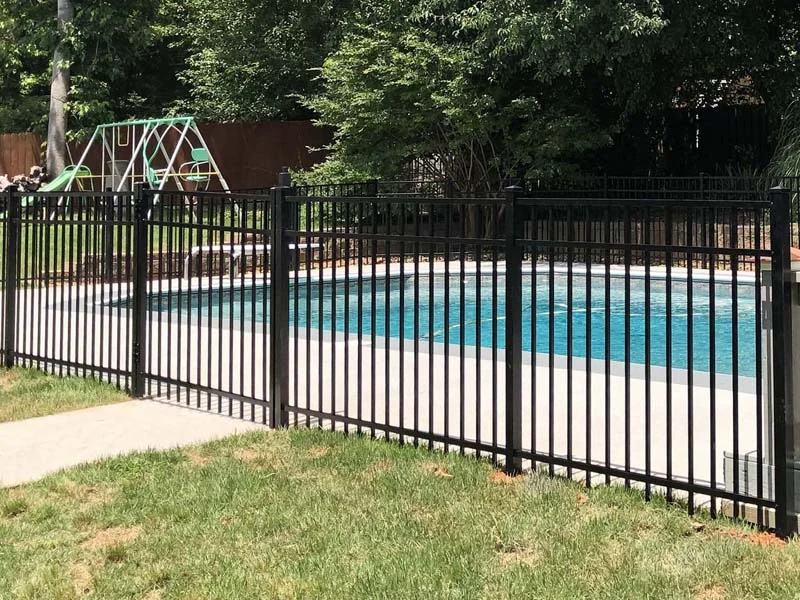
Pool Gates with DJ Fence & Gate
A pool gate is a working safety component, not simply a matching fence panel. We review how people approach it, where it swings and whether the surrounding fence and supports suit the proposed installation.
Compare open-view aluminum or ornamental metal with vinyl layouts, then select the gate dimensions and compatible hardware. MagnaLatch latches and TruClose hinges are options to discuss for the actual gate; a product name alone does not establish compliance.
For an existing gate that drags, stays open or fails to latch, keep access secured and request an assessment. Hinge adjustment may help, but movement in the posts, frame damage or an unsuitable latch position may need a broader repair.
The details that matter
Coordinate the pedestrian gate with the fence, walking route and pool-barrier requirements.
Review suitable hinge models, gate weight, post stability and dependable closing action.
Discuss a compatible latch and its required release position, including access from both sides.
Assess dragging, misalignment and latch failures together with the surrounding barrier.
Compare the details
Start with the look you like, then compare privacy, access, care and the needs of your property.
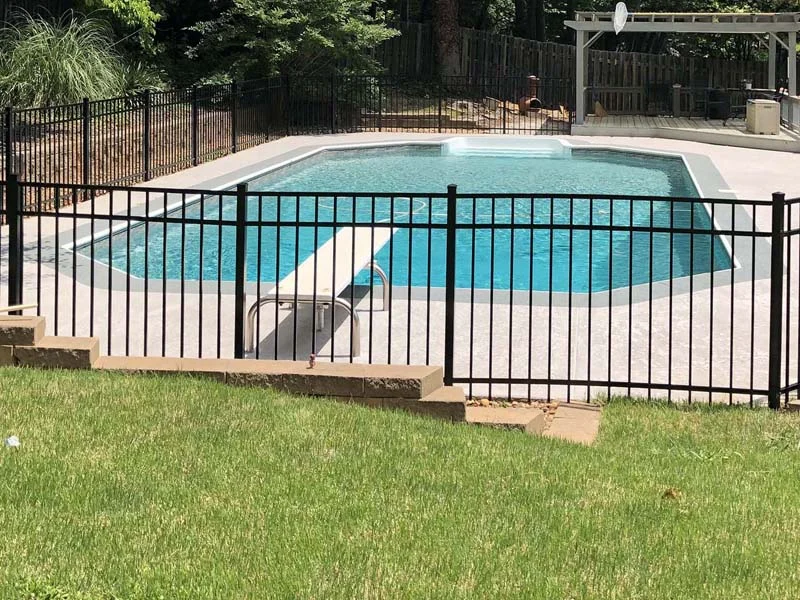
A straight top profile coordinates the gate with its surrounding panels. Review the swing, self-closing hinges, self-latching hardware and all openings.
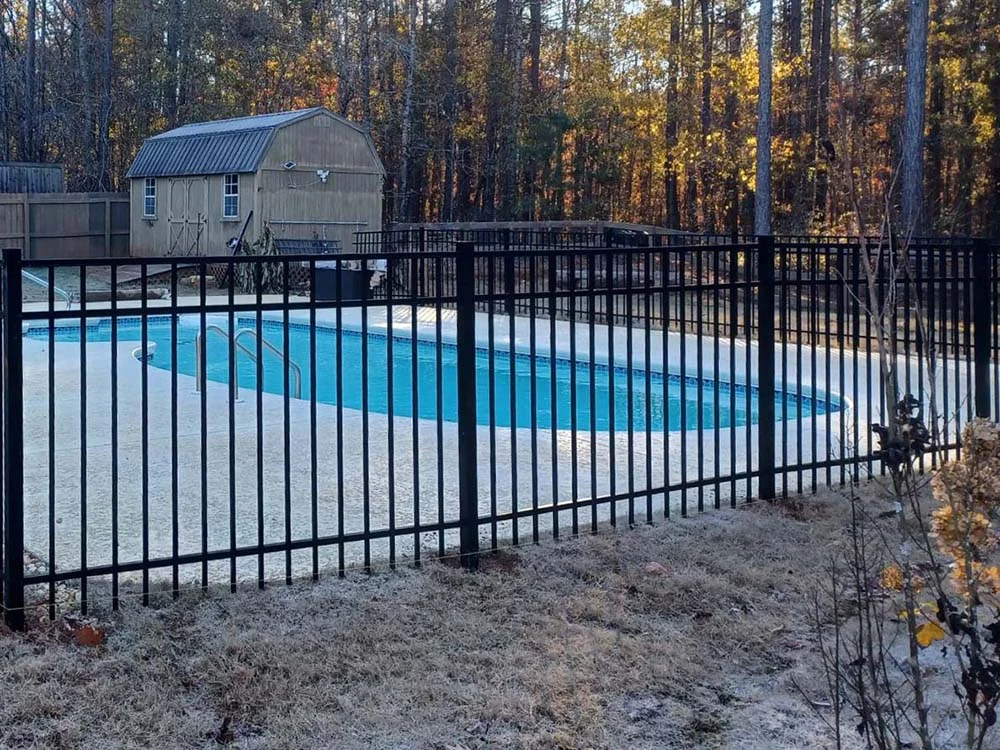
A matching single gate can be worked into the pool's perimeter. Plan the walking approach, gate travel and access to the latch before fixing its location.
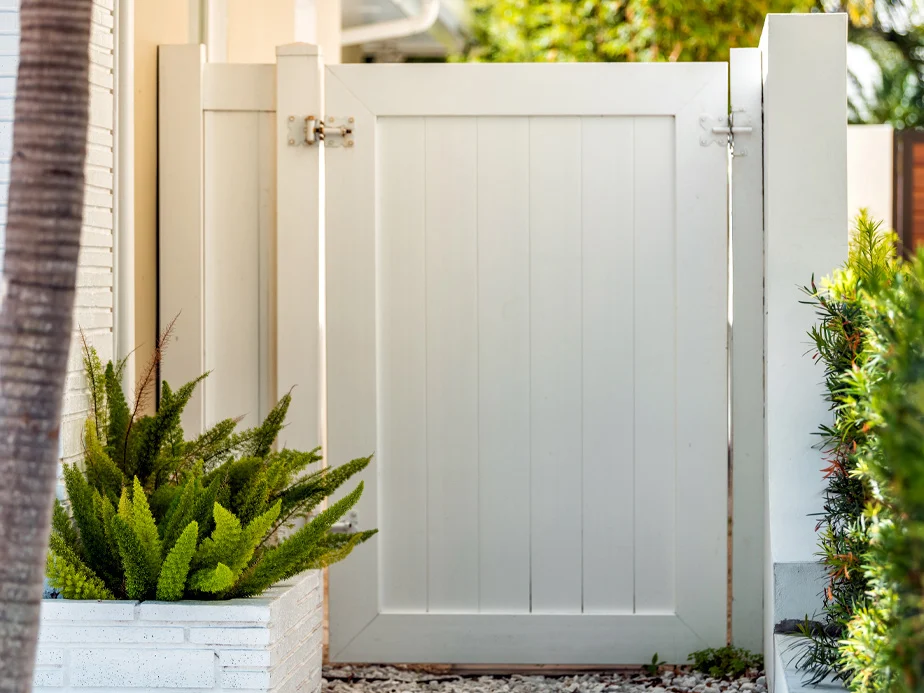
Vinyl is another material to discuss for the complete barrier. This photo shows the gate style, not a compliance certification; pool-specific dimensions and hardware must be selected for the project.
A closer look
The leaf, frame, posts, hinges, latches and adjoining fence affect one another. A gate that drags may have a support problem rather than a latch problem. For replacement work, we assess what can stay before specifying a new leaf.
Wood, vinyl and open metal gates place different demands on the assembly. Wide and paired openings need their own details. Include finish, hardware, hold-open arrangements and the direction of travel in the agreed scope.
At handover, review normal operation, how to secure the opening and the care information supplied for the equipment. Keep the operator and control documentation where the property manager or owner can find it. Access credentials should not be sent through a public estimate form.
New gates have a two-year complimentary adjustment provision under the written warranty. That is not an unlimited warranty on materials or operators. Residential, repair and commercial workmanship classifications have different terms; confirm which applies to the agreed project.
Pool code & gate hardware
Start with the whole barrier: fence height, openings, gate travel, latching and nearby structures. Georgia DCA lists the 2024 International Swimming Pool and Spa Code with Georgia amendments among its current construction codes. Check Georgia’s current code listing.
This is a planning guide, not a complete code checklist or a guarantee of approval. Confirm the applicable code edition, amendments, permits and inspection requirements with the authority for your property; public and community pools need additional review.
The model code does not allow a 4-inch-diameter sphere to pass through general barrier openings; chain-link openings have a tighter 1¾-inch limit. Check the gate edges, the fence-to-house connection and changes in grade, not just the space between pickets. ISPSC §§305.2.2 and 305.2.8.
Ask us to review the complete enclosure, including any existing sections that will remain.
The model-code baseline is a barrier at least 48 inches high, measured from the outside. Its bottom-clearance limits are 2 inches over nonsolid ground such as grass or gravel and 4 inches over a solid surface such as concrete; special barrier systems can have different provisions. ISPSC §305.2.1.
Changes in grade, retaining walls and nearby raised surfaces need their own review. Confirm the required height for your property rather than ordering by nominal panel size.
Where the tops of horizontal rails are less than 45 inches apart, the model code places those rails on the pool side and limits vertical-member spacing to 1¾ inches. With rail tops 45 inches or more apart, vertical spacing can be up to 4 inches, subject to the other opening rules. ISPSC §§305.2.6–305.2.7.
A fence that looks tall enough may still have the wrong rail layout. Decorative openings, adjoining structures and equipment also belong in the review.
Pedestrian pool gates must open outward, away from the pool or spa, and be self-closing and self-latching under the model code; they must not swing over stairs. Utility and double-gate arrangements have separate provisions. ISPSC §305.3.
Plan a clear swing path and stable gate posts. Tell us immediately if an existing gate drags, needs a push to close or misses the latch; keep pool access secured while the problem is addressed.
MagnaLatch Series 3 Top Pull is a magnetic child-safety gate latch with vertical and horizontal adjustment and a lock-status indicator. Its exact model, mounting position and gate gap must suit the installation. D&D MagnaLatch specifications.
Latch height is not one universal measurement: the 2024 model code requires at least 54 inches for a residential latch release accessed from outside that is not self-locking, while other release arrangements have different rules. An inside release also triggers tighter nearby opening limits. ISPSC §§305.3.3–305.3.4.
TruClose hinges provide adjustable self-closing spring tension, with different models for gate materials, weights and use levels. Select the hinges for the actual gate rather than treating every hinge in the range as interchangeable. D&D TruClose hinge range.
Check that the gate closes and latches without assistance, follow the hardware instructions and never prop the gate open. A barrier is only one layer of protection and does not replace close adult supervision. CPSC pool barrier safety guidance.
Send a photo of the whole opening and close-ups of the hinges and latch. We will review the gate and its supports together, then identify the proposed material, hardware and installation scope.
Plan the complete pool fence Discuss your pool barrier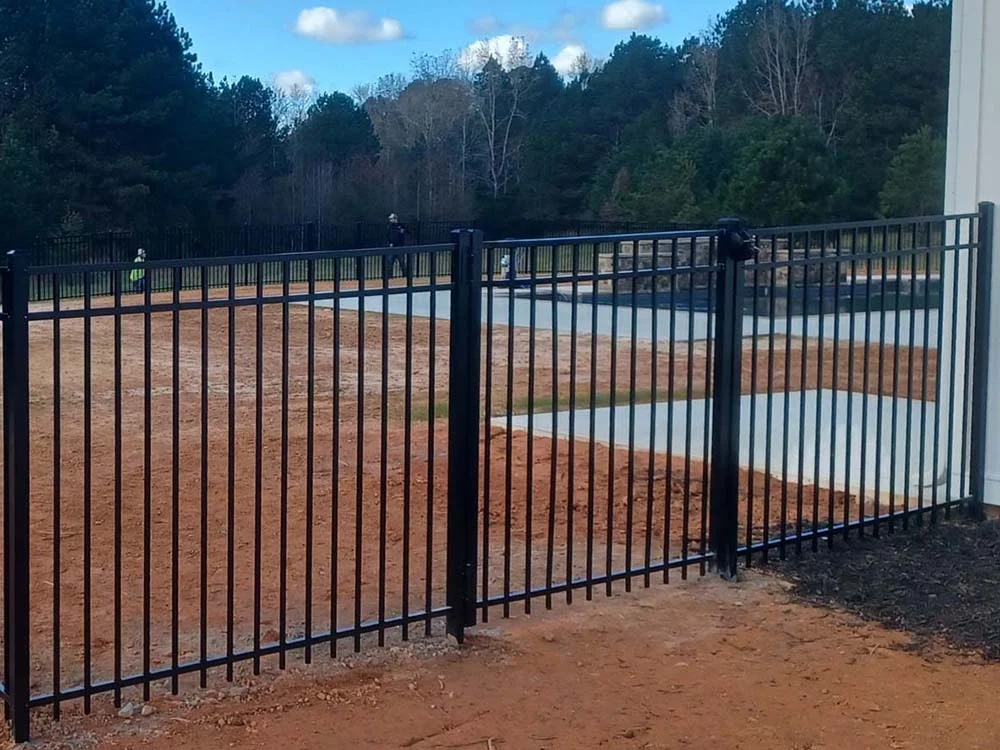
A clear way forward
Send photos of the gate, adjacent fence, ground and pool approach.
Identify the local authority, permit requirements and whether the pool is private or public.
Agree on the gate, posts, hinges, latch, finish and any adjoining repairs.
Discuss normal operation, inspection needs, hardware instructions and the applicable written warranty.
We stand behind our work
Qualifying complete new residential installations are covered for as long as the original customer owns the property. Non-transferable. Material defects, natural wood changes, and other exclusions apply. Repairs and commercial work have separate terms.
Before we get started
We can assess a gate-only replacement. The supporting posts and adjoining fence must be suitable, and the proposed work needs to be reviewed against the applicable barrier requirements.
No. The exact latch and its installation are only part of the system. Gate height, openings, swing direction, self-closing action and the surrounding barrier also matter.
Yes. Keep pool access secured and share photos of the hinges, latch, frame and posts. Do not rely on a gate that needs assistance to close or latch.
No material is automatically approved for every barrier. The complete design, openings, supports and hardware must be checked for the property.
The opening size, material, frame, supports, operating method, site preparation, removal, operator, controls and related trade work can all affect the scope. A meaningful estimate separates those items.
Explore your options
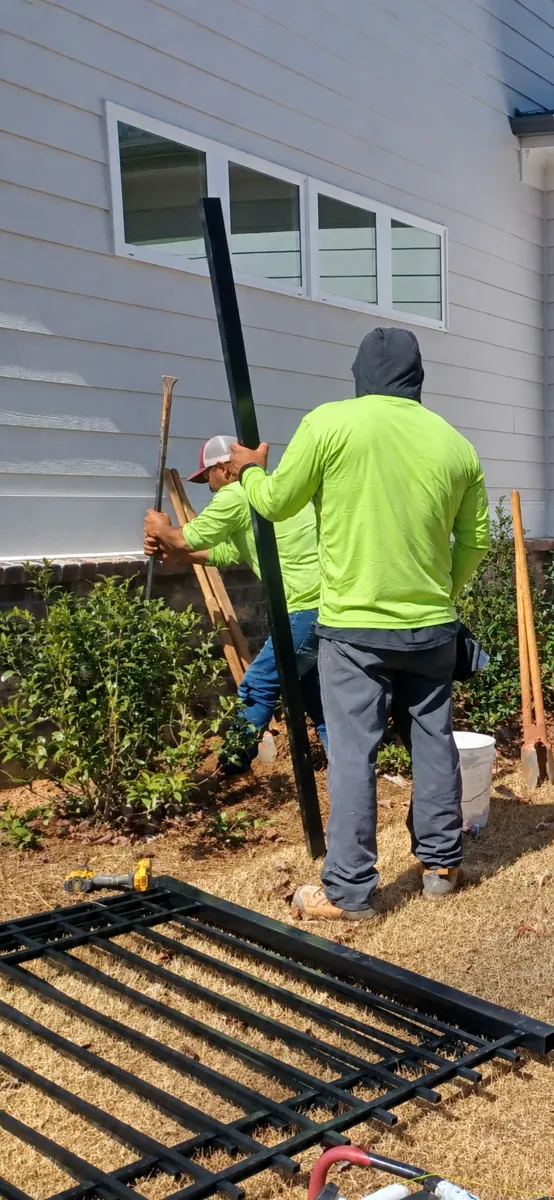
Leaning posts, broken boards, storm-damaged sections, and everyday wear. Let’s look at what can be fixed before you commit to a whole new fence.
Take a closer look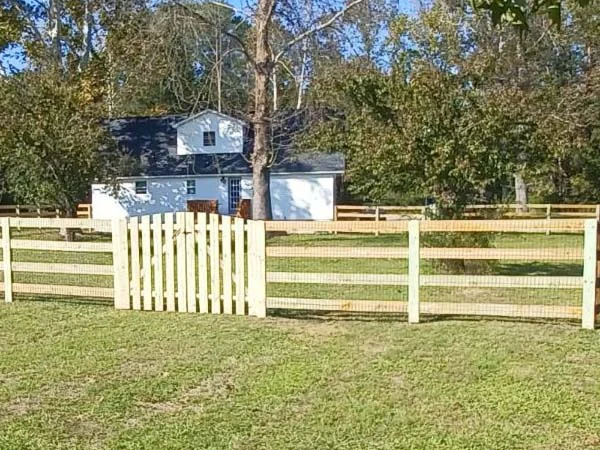
Walk gates, driveway entrances, and commercial openings designed around the way people and vehicles use your property.
Take a closer look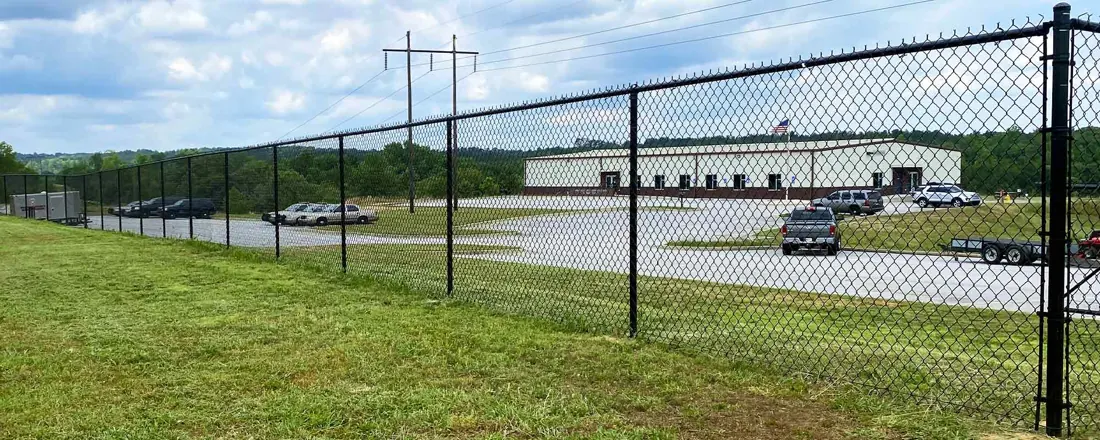
Commercial fencing, repairs, gates, and access control for property owners, facility teams, general contractors, and public-sector projects.
Take a closer lookClose to the work
Based in Paulding County, with residential and commercial service across these eight counties.
Let’s get it taken care of
Share the location and a few details. We’ll follow up to discuss the work, answer questions, and arrange the next step.
(678) 245-1920Have photos? Text them to our main number. For commercial plans, email your documents or include a sharing link in the form.