
Residential yards
Discuss the property line, pet or yard use, and gate access needed for daily life.
Chain-Link Fencing
Chain-link fencing and gates for backyards, work areas, business properties, and larger perimeters.
Call or text (678) 245-1920.
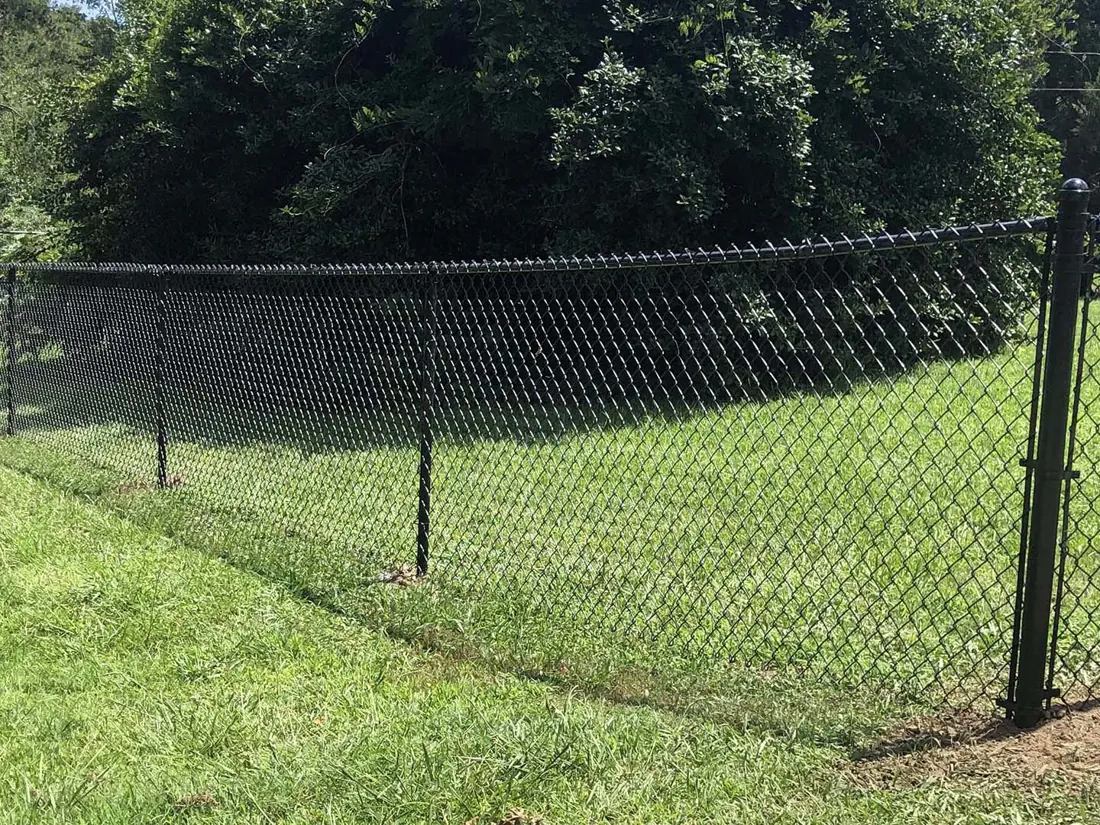
Chain-Link Fencing with DJ Fence & Gate
Chain-link projects range from a backyard boundary to a commercial site with vehicle gates and controlled access. We start by understanding the purpose of the fence, the openings it needs, and the specification appropriate to the project.
Discuss galvanized or coated options, height, gate configuration, and any plans or requirements already in place. A commercial specification should be reviewed in full rather than reduced to a fence height and approximate length.
We also assess damaged chain-link fabric, posts, rails, and gates. A repair plan should consider both the damaged part and the supports around it. If screening is part of the request, bring that into the design discussion before adding it to an existing fence.
The details that matter
Discuss the property line, pet or yard use, and gate access needed for daily life.
Review the specified materials, heights, openings, and any site coordination requirements.
Plan access points for people, deliveries, and equipment, with manual or automated options where appropriate.
Assess affected sections alongside posts, rails, and connections before finalizing the repair.
Compare the details
Start with the look you like, then compare privacy, access, care and the needs of your property.
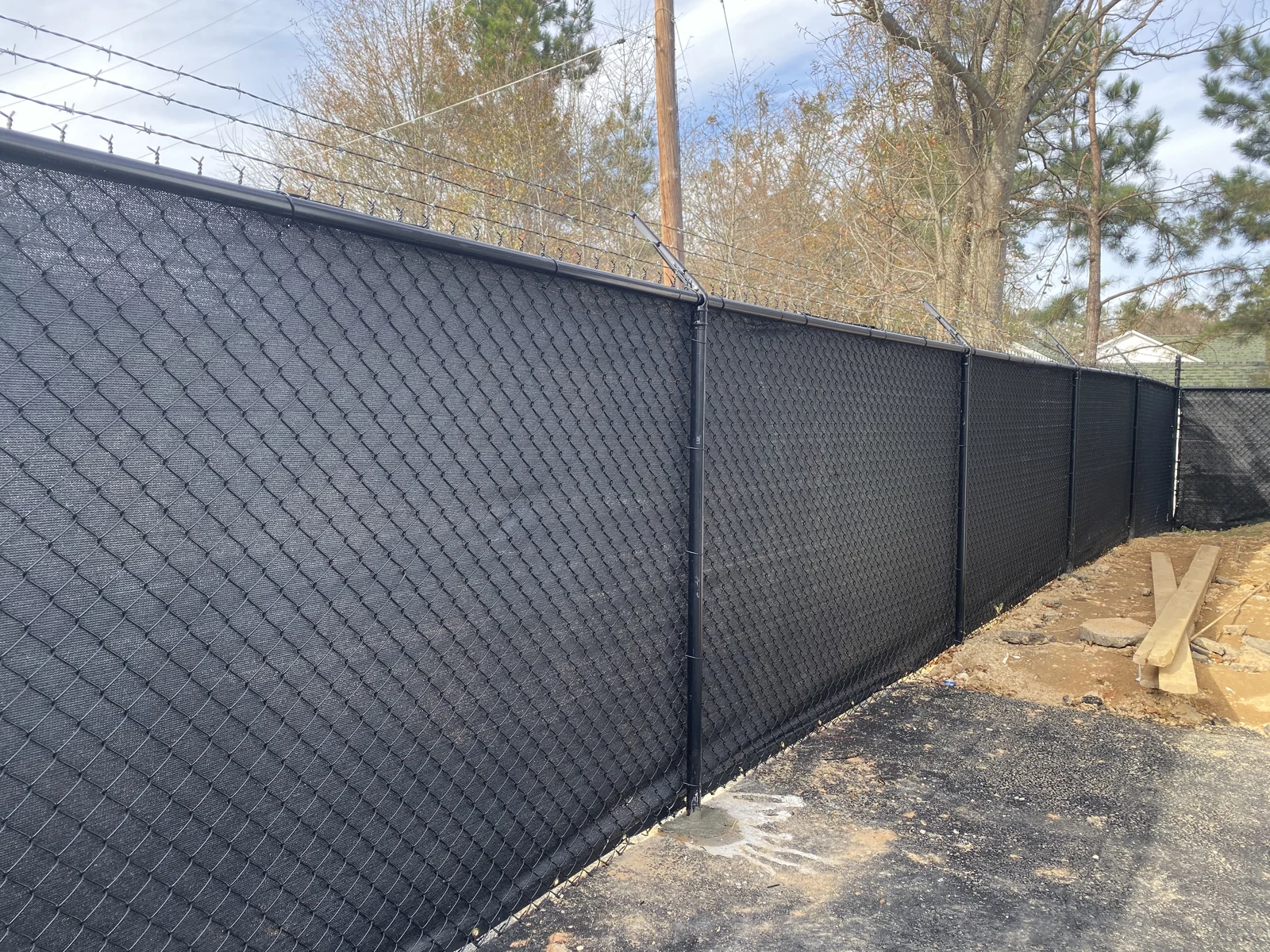
Screening changes both visibility and wind exposure. Review the fabric, supports, local restrictions and suitability of adding a screen to the selected fence system.
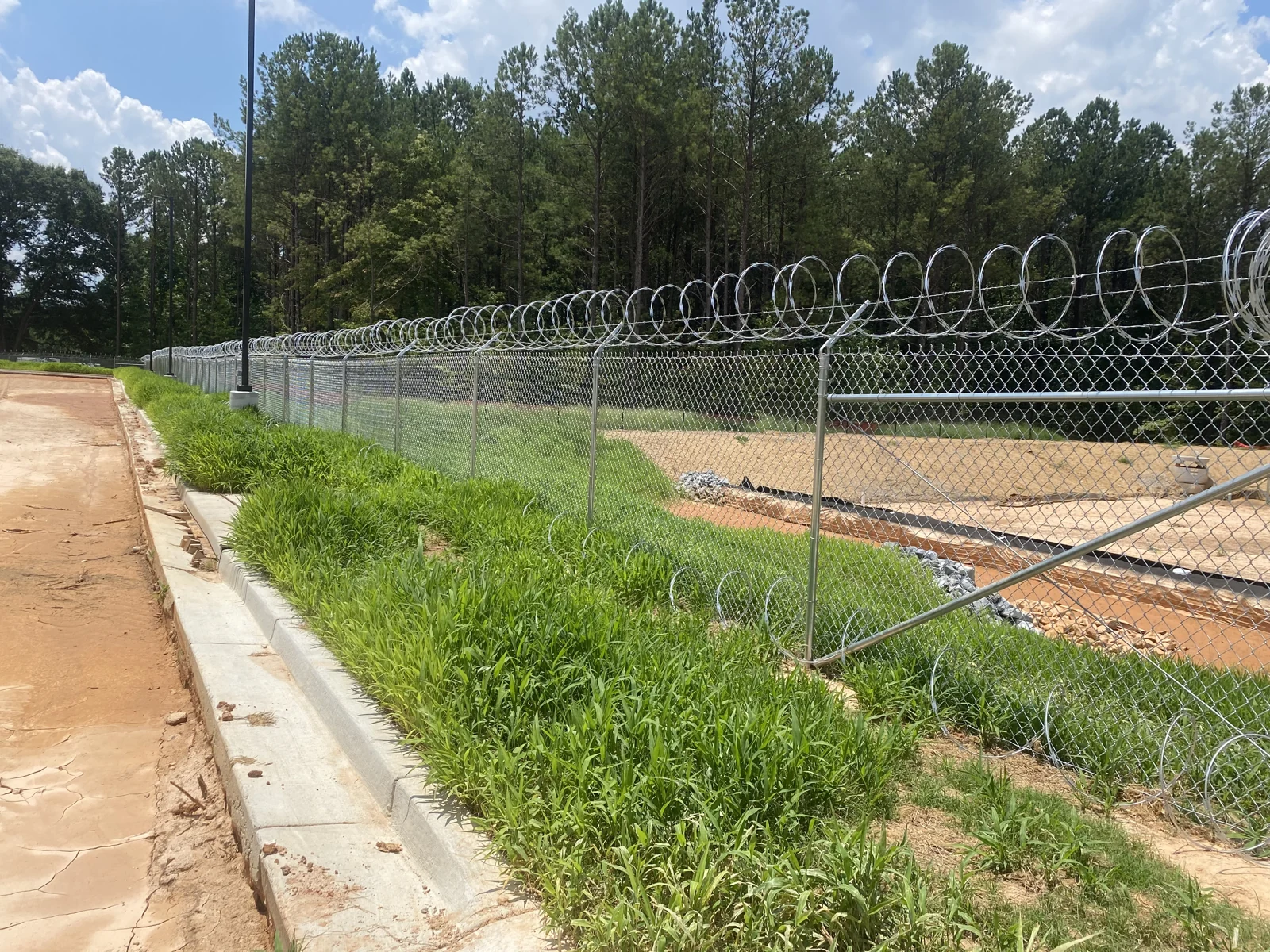
This galvanized perimeter includes a security topping. Specialized toppings need a site-specific review of safety, restrictions, access and the commercial specification.
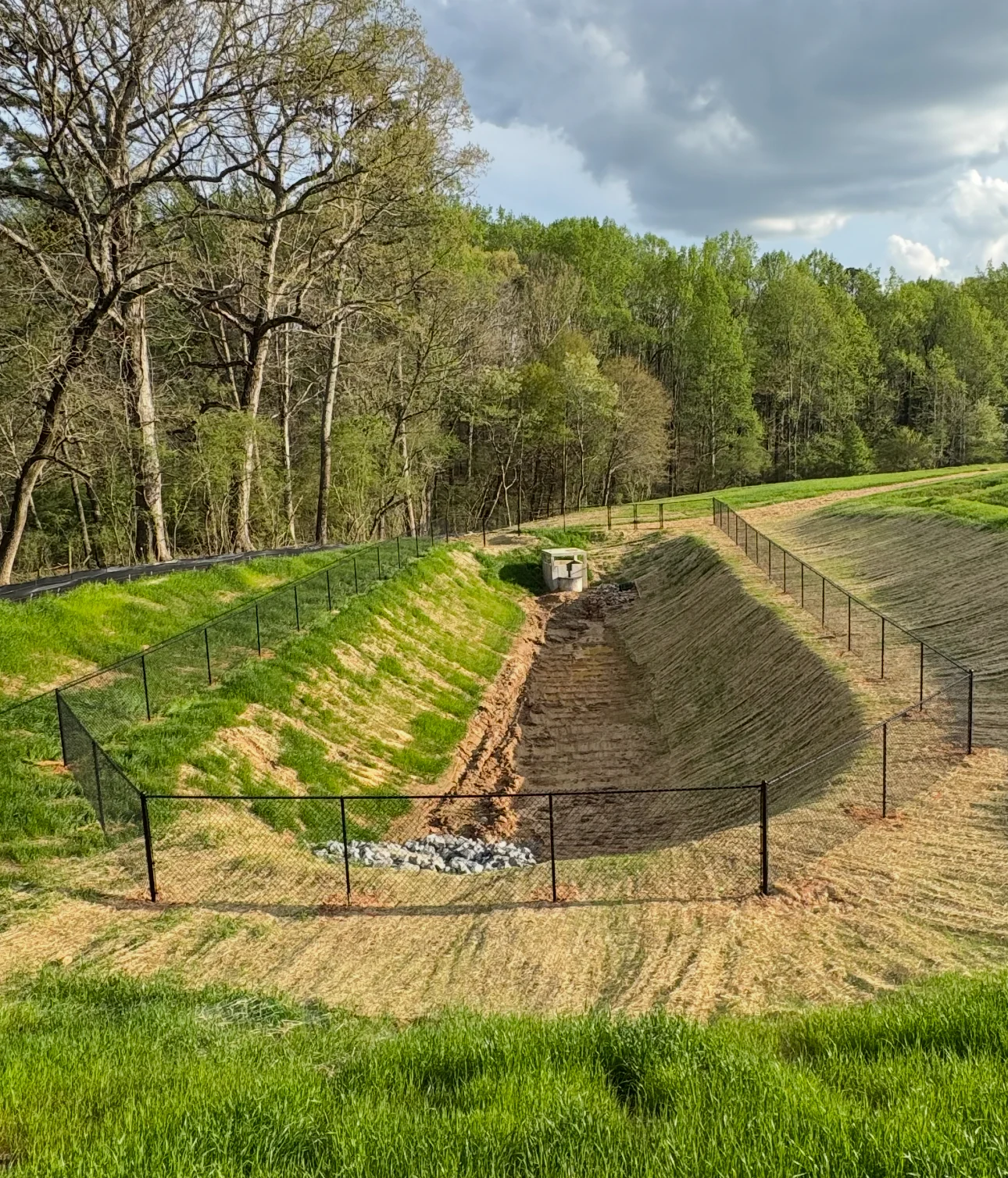
A dark finish makes the fence less visually prominent against the landscape. Match fabric, posts, rails and gate frames, and plan how the line follows the terrain.
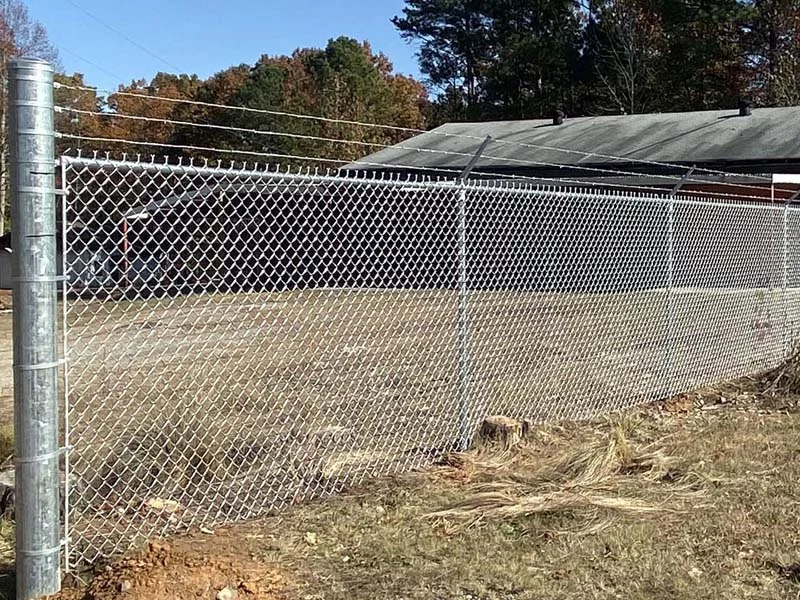
An uncoated metallic finish creates a practical open boundary. Compare mesh, wire gauge, posts and gate framing rather than choosing by color alone.
A closer look
The fabric is only one part of a chain-link fence. Line posts, terminal posts, rails, tensioning components and fittings work together. A commercial specification may differ substantially from a small backyard enclosure.
State the intended use before comparing proposals. Fence height, mesh, wire and framework should be described clearly enough to understand what is being offered. Corners, ends and gate openings need appropriate terminal details.
Galvanized and coated options offer different appearances. With coated fencing, confirm whether the fabric, posts, rails, fittings and gate frames have the same finish. Use current product samples to compare colors rather than relying on a photograph alone.
Slats or screening change visibility and how wind acts on the fence. Existing posts and framework should be assessed before a screen is added. A privacy accessory is not a substitute for checking the supporting system.
For an animal enclosure, discuss the animal's size, digging and climbing behavior and the gaps at the bottom and gates. For an equipment yard, start with the vehicles and machinery that need access.
A clear gate opening is different from the overall length of a gate assembly. Swing and sliding arrangements use space differently. Plan parking, turning and pedestrian movement rather than treating the entrance as a leftover gap.
Damaged fabric does not necessarily mean the whole fence must be replaced. We look at posts, rails, tension and adjacent sections before proposing a repair. A displaced terminal can affect a larger run than the visible impact area.
Share photos from both ends of the damaged section and identify any security or access concern. Fabric, finish, total length, gate type, removal and site conditions all affect the estimate. Commercial warranty terms are separate from residential lifetime coverage.
See the possibilities
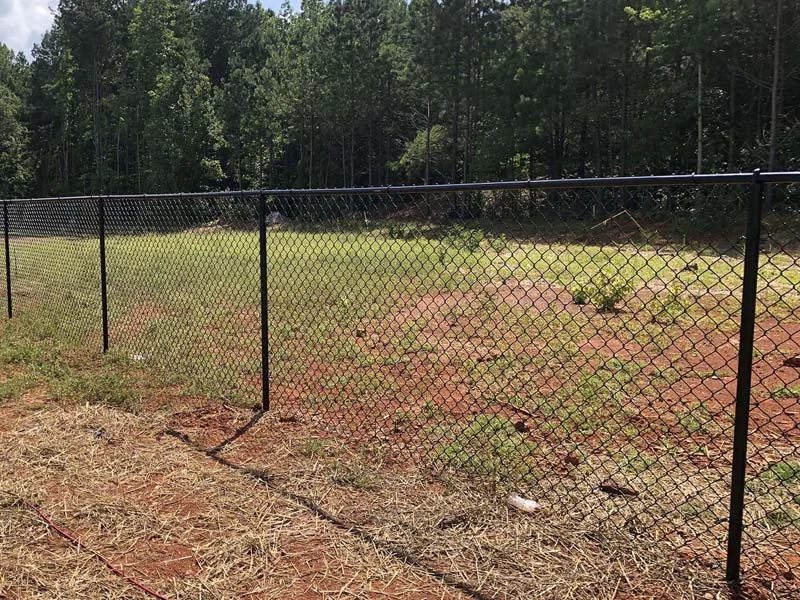
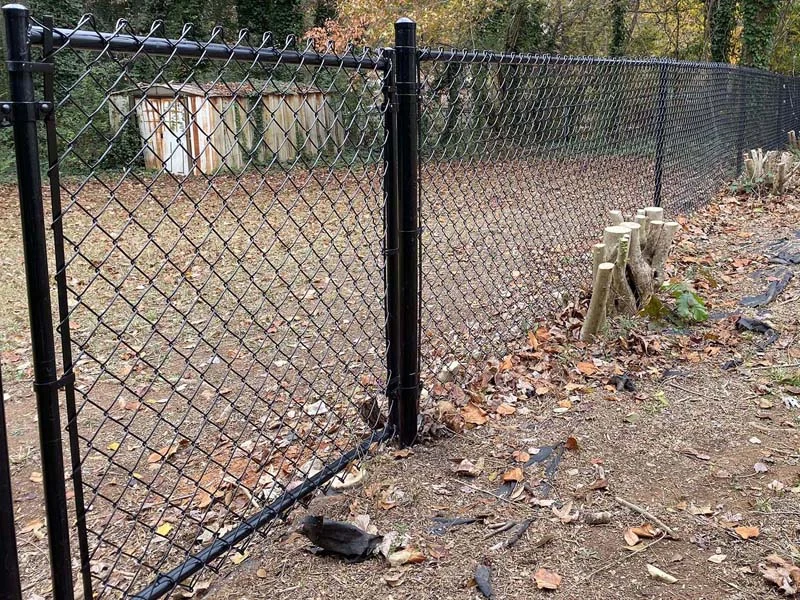
Use these design examples to compare layouts, finishes and openings. Share the details you like when you request an estimate.
A clear way forward
Share the intended fence route and reliable property information.
Discuss finish, height, framework, and the requirements for the property.
Identify gate locations and the traffic they need to handle.
Privacy inserts or screening should be evaluated as part of the project rather than assumed suitable for every existing fence.
We stand behind our work
Qualifying complete new residential installations are covered for as long as the original customer owns the property. Non-transferable. Material defects, natural wood changes, and other exclusions apply. Repairs and commercial work have separate terms.
Before we get started
Yes. We can discuss available coated and galvanized options and identify the selected specification in the estimate.
Yes. The gate, operator, safety devices, and supporting work need to be assessed together.
We can evaluate that option. The surrounding framework and supports need to be in suitable condition for the proposed repair.
Tell us that is part of the goal. We’ll review the fence and proposed screening rather than assume the existing system is suitable.
Slats or screening may be options, but their added wind exposure and compatibility need review. We should assess the framework before adding a screen to an existing fence.
That depends on the specification. Confirm the finish on the fabric, framework, fittings and gates in the proposal.
We can assess that approach when the posts, rails and other components remain suitable. A damaged terminal or support may require a wider repair.
Provide the height, fabric and framework specifications, finish, approximate runs, gates, security accessories, removal work and any relevant drawings or site restrictions.
Explore your options
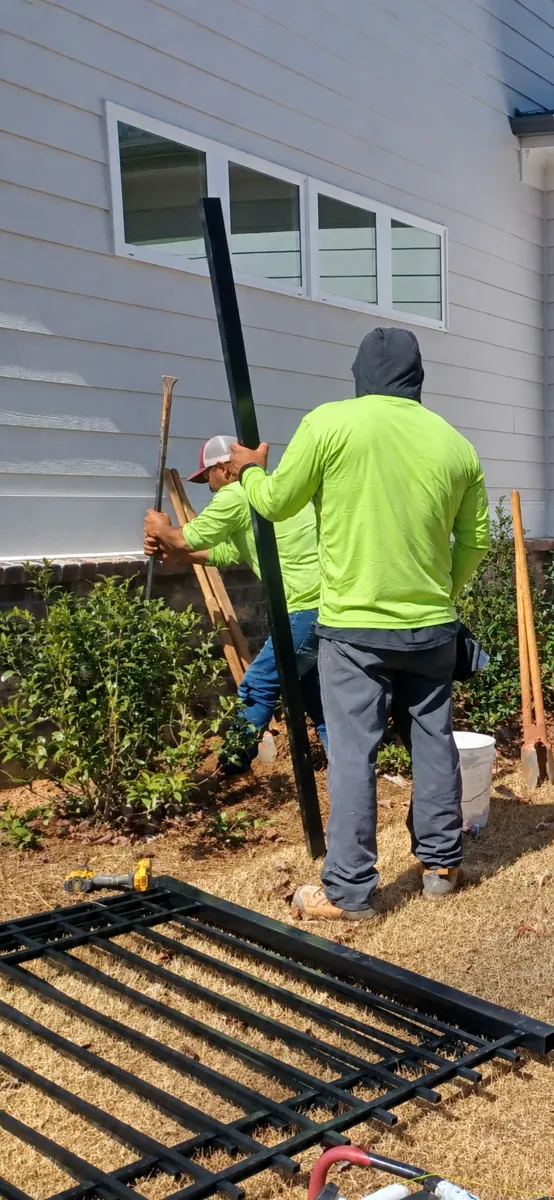
Leaning posts, broken boards, storm-damaged sections, and everyday wear. Let’s look at what can be fixed before you commit to a whole new fence.
Take a closer look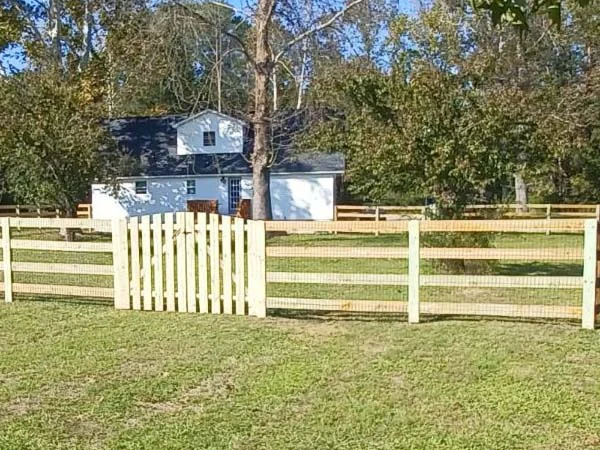
Walk gates, driveway entrances, and commercial openings designed around the way people and vehicles use your property.
Take a closer look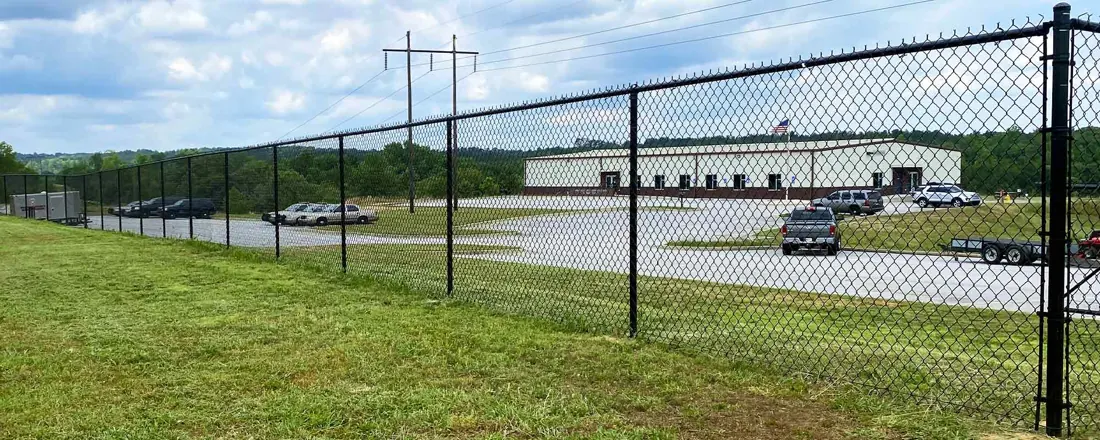
Commercial fencing, repairs, gates, and access control for property owners, facility teams, general contractors, and public-sector projects.
Take a closer lookClose to the work
Based in Paulding County, with residential and commercial service across these eight counties.
Let’s get it taken care of
Share the location and a few details. We’ll follow up to discuss the work, answer questions, and arrange the next step.
(678) 245-1920Have photos? Text them to our main number. For commercial plans, email your documents or include a sharing link in the form.